
Note to Reader:
It would be a misunderstanding to evaluate this work through a one-dimensional, aphorism-by-aphorism rendering. While a reader may gain a deeper understanding of rote Buddhism through the mosaic of topics covered here, that is not the ultimate purpose of this book.
The true goal—in inviting the reader to step back and contemplate the museum rather than individual artworks—is to present a system of allegory describing the journey of awakening for a rogue philosopher: from their genesis as an ordinary citizen within a dystopian herd-city, to their dangerous, courageous journey of symbolic asceticism outside the safe societal walls and across the raw, desolate dunes of Samsara.
What compels a traveler to embark on such a risky journey? While every traveler is unique, most are free spirits who feel disenchanted by the zeitgeist of the hive-city—a culture that conditions a tanha (craving) for wealth, status, and social standing. The traveler does not value these things. Instead, they direct their tanha toward higher pursuits: self-actualization, knowledge, and wisdom. They realize that a true search for these virtues lies deep in the desert.
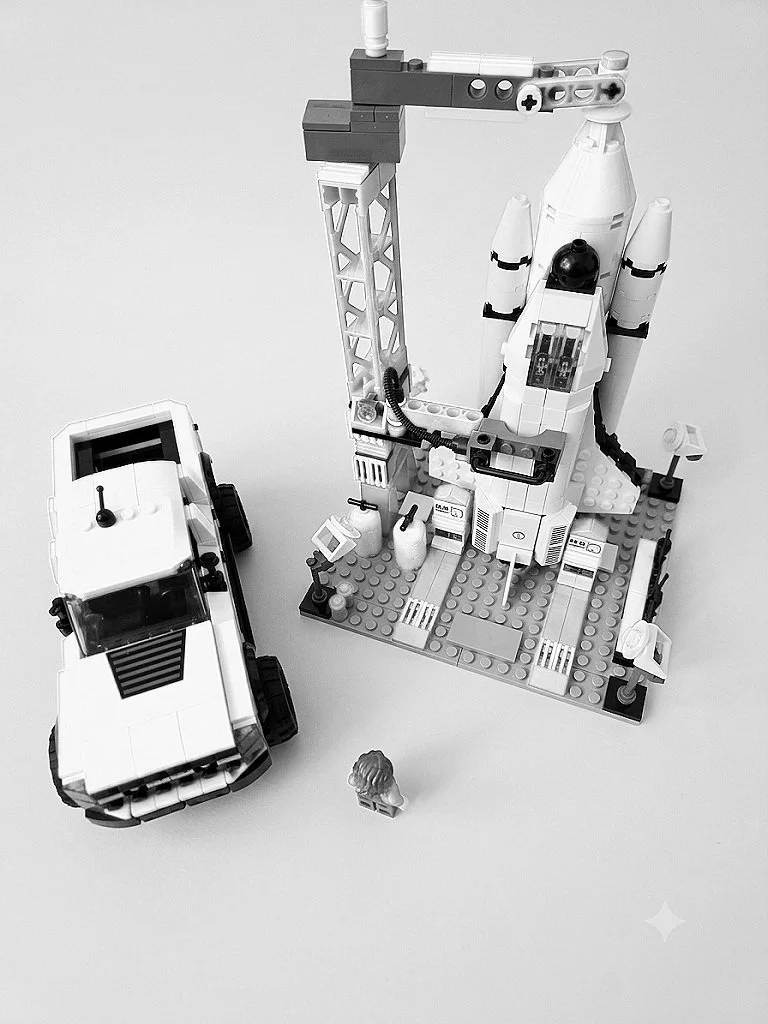
Out in those vast dunes, the citizen becomes an explorer. As they journey, they encounter derelict vehicles abandoned by past travelers, salvaging their parts. In this allegory, these parts represent components of insight gathered through life experience. The traveler also encounters beautiful oases—which represent books, offering pools of knowledge to refresh the weary wanderer. Finding shade at an oasis to meditate, the traveler contemplates these salvaged parts, learning how to assemble them. Reading, then, becomes the manual for consolidating the hard-won insights of life.
A traveler’s ability to understand their salvaged components depends largely on the oases they find and meditate within—that is, the depth and variety of philosophically rich books they digest. The final blueprint a traveler constructs is shaped by these encounters: the oases they visit, the depth of wisdom found there, the sequence of their discoveries, and the raw insights they’ve accumulated along the way.
Once a blueprint takes shape, the traveler can finally construct a 'Great Vehicle'—their personal formulation of the Dhamma. (The Buddha referred to Dhamma as ‘Great Vehicles’)
Naturally, not all vehicles are built equal; some possess far greater power and utility for surviving the desert. A sturdy vehicle allows the traveler to push into deeper, untamed regions of the wilderness, uncovering rarer oases and acquiring advanced insights. Over time, as their understanding evolves, the traveler may even risk dismantling their current vessel—scrapping it for parts to build a more sophisticated craft; as done by the many travellers before them.
Early blueprints rarely yield a vehicle strong enough to transcend the desert entirely. Yet the traveler presses on into the deep expanse, driven by the hope that through enough study and contemplation, they will design an ultimate craft—one powerful enough to carry them beyond Samsara altogether.